
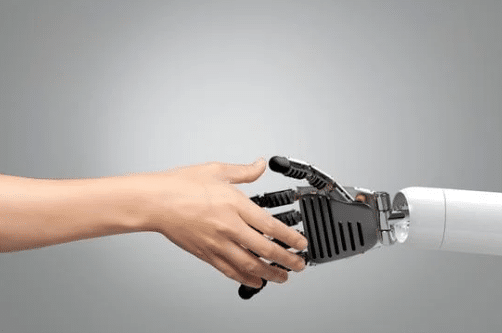
In the rapidly evolving world of Artificial Intelligence, the promise of transformation often shines brightly. However, beneath this glimmer, a sobering truth exists: as per Project Management Institute a significant number of AI projects, an estimated 70-80%, falter. Indeed, this isn’t just a statistic; it represents countless hours of dedication, resources, and the hopes of teams striving to harness AI’s power. But what if we told you that many of these setbacks are not due to insurmountable technical challenges, but rather to fundamental misunderstandings and a lack of a heartfelt, human-centric approach?
Consequently, the journey into AI doesn’t have to be fraught with despair. On the contrary, just like any meaningful endeavor, success in AI requires a blend of rigorous methodology and a deep understanding of its unique rhythm. It’s about approaching each project not as a rigid technical task, but as an evolving quest to solve real-world problems for real people.
Why Do AI Dreams Sometimes Fade?
Imagine building a bridge without understanding the terrain, or crafting a symphony without listening to the individual instruments. Many AI projects fail because they make similar fundamental missteps:
- Treating AI like traditional software: AI is alive, constantly learning from data. It’s not a static application; it’s an evolving intelligence that demands a different kind of nurturing.
- Forgetting the “why”: Without a clear business goal and a tangible return on investment, an AI project can become a beautiful solution in search of a problem. Our hearts must be aligned with a purpose that truly matters.
- Underestimating the data: Data is the lifeblood of AI. Insufficient quantities, poor quality, or data that doesn’t mirror the real world can starve even the most brilliant algorithms, leading to models that fall short when it truly counts. This is where patience and meticulous care come into play.
- The leap from proof-of-concept to reality: A dazzling prototype might capture imagination, but the true test lies in its ability to deliver in the messy, unpredictable real world. It requires empathy for the diverse scenarios it will encounter.
- The hidden costs of nurturing AI: The time and financial commitment, especially for data acquisition and preparation, are often vast. Underestimating these resources can lead to project burnout. It’s an investment of not just capital, but also spirit.
- Ignoring the ongoing care: An AI model is not a “set it and forget it” solution. It requires continuous monitoring, maintenance, and evolution to remain relevant and effective. Like any living system, it thrives with consistent attention.
- Falling for the hype: The allure of AI can sometimes lead to overpromising. Setting realistic expectations and understanding AI’s current limitations are crucial for sustainable success and building trust.


The Heartbeat of a Successful AI Project: A Journey Through Stages
Just as a masterpiece is painted stroke by stroke, a successful AI project unfolds through a series of thoughtful, interconnected stages. This isn’t a rigid checklist, but a compassionate framework that allows for iteration and growth, much like how we learn and adapt in life. The CPMAI™ methodology offers a guiding light for this journey:
- Business Understanding: This is where we listen with our hearts. What problem are we truly trying to solve? Is AI genuinely the right path, or is there a simpler, more human solution? This stage is about aligning our ambition with a genuine need.
- Data Understanding: Here, we explore the canvas upon which our AI will learn. Do we have the right data? Is it accessible? Does it truly reflect the nuanced reality of the problem? This requires curiosity and a willingness to understand the story the data tells.
- Data Preparation: This is often the unsung hero, the meticulous work of cleaning, labeling, and shaping the data. It’s a labor of love that directly impacts the intelligence our AI will acquire. Poor data here can lead to a muddled mind for our AI.
- Model Development: This is where the magic of algorithms comes into play – selecting, training, and fine-tuning the model. But even here, success isn’t just about code; it’s about making choices that resonate with our initial goals and ethical considerations.
- Model Evaluation: We then step back to ask: Is our AI performing as intended? Is it fair? Does it align with the values of trustworthy AI? This critical stage is about ensuring our creation serves humanity responsibly.
- Model Operationalization: Finally, we bring our AI into the world. Integrating it into workflows, monitoring its performance, and creating feedback loops for continuous improvement. This is where our AI truly begins its journey of making a difference, always with room to learn and grow.
These stages are not linear; they are a dance of discovery, allowing us to revisit and refine as new insights emerge. Skipping a step is akin to missing a beat in this dance, often leading to a disjointed performance.

Embracing the Journey with Empathy
The path to successful AI is not just about algorithms and data; it’s about understanding human needs, nurturing curiosity, and embracing the iterative nature of creation. It’s about building with empathy, recognizing that AI, at its best, is a tool to amplify human potential and solve challenges that touch our lives.
Let’s approach AI projects not with a fear of failure, but with the courage to learn, the patience to nurture, and the vision to create solutions that not only work but also resonate with the human heart. The future of AI is not just intelligent; it is deeply, profoundly human.
AI Won’t Save You. But the Right Partner Might.
If you’re planning to integrate AI into your PPM processes or run an AI project — or if you’re just trying to make Jira actually work for your team—start by asking:
- Do we know what problem we’re solving?
- Are our people ready for this?
- Can we learn fast, fail safely, and adapt quickly?
And most importantly: Do we have someone by our side who truly gets it?
At Genius Gecko, we’re ready when you are. Let’s build something amazing—together.