

At Genius Gecko, we’ve worked with more than 230 organizations worldwide — from tech scale-ups to government agencies, from logistics giants to NGOs. Across industries, cultures, and tools, one truth has stood out:
A great project manager can transform not just a project, but the entire organization.
And no, it’s not just about updating a Gantt chart or closing Jira tickets.
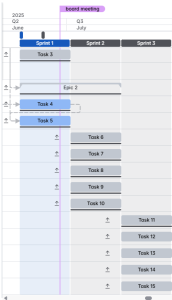
It’s about being the bridge between vision and execution, the person who ensures big ideas don’t get stuck in PowerPoint slides but are delivered as measurable, lasting outcomes.
Our own experience echoes what the Project Management Institute (PMI) has been saying for years: high-impact project managers excel in five key areas:
- Putting the customer at the center
- Building a high-performing team
- Cultivating strong relationships and clear communication
- Driving the project with precision and purpose
- Removing obstacles to progress
Let’s explore each of these — with real-world examples from our clients and links to PMI research confirming why they matter.
1. Putting the customer at the center
When we say “customer” in project management, we don’t just mean the person who signs the contract. In PMI’s definition, they can be internal stakeholders (leaders, other departments) or external clients (partners, suppliers, end users).
The goal is not simply to meet their requirements but to understand their true needs. PMI stresses that clear stakeholder engagement is critical for value delivery — and that begins with asking the right questions (PMI Core Competencies).
When we start a project, we like to dig into:
- What problem are you trying to solve?
- Why now?
- What will success look like for you?

One of our clients, a manufacturing company, initially approached us for “a better workflow in Jira.” But after exploring the why, we found the real issue: missed delivery dates due to hidden dependencies. By mapping those dependencies in BigPicture, we tackled the root cause — not just the surface request.
Focus on value delivery and customer alignment confirms that a PM’s role is to translate stated requirements into solutions that deliver measurable outcomes.
2. Building a High-PerformingTeam
The best project managers treat team composition as strategic architecture, not a staffing checklist.
They:
- Match skills to project needs (not just availability).
- Understand motivations and strengths.
- Build a culture of trust and psychological safety.

PMI’s Project Manager Competency Development Framework emphasizes performance competence — what you can deliver with your knowledge — and personal competence, the behaviors that inspire team success.
3. Cultivating strong relationships and clear communication
This is where many PMs either shine or struggle. Tools can help you communicate, but they can’t replace human connection.
The PM sets the tone by:
- Checking in regularly.
- Ensuring every team member understands how their work contributes to the big picture.
- Creating a safe space for blockers and concerns to be raised early.
One of our favorite transformations happened at a global company rolling out portfolio management in BigPicture. Their PM introduced a simple ritual: starting every weekly meeting with “What’s blocking you?” This shifted the culture — issues were surfaced early, dependencies were addressed, and trust grew.
Effective communication is a top driver of project success andPMs must go beyond information transfer to actively engage and influence stakeholders. Check out the PMI Communication Guide to get to know more about this topc.
4. Driving the project with precision and purpose
Yes, project managers track timelines, budgets, and deliverables. But their real power lies in connecting the dots so that everyone sees the entire system, not just their task.
In one tech scale-up, we integrated all projects into a program-level view in BigPicture. Suddenly, executives could see:
- Where risks were clustering.
- How dependencies were affecting schedules.
- Where capacity constraints were about to hit.
This single source of truth turned chaotic reporting into informed decision-making.
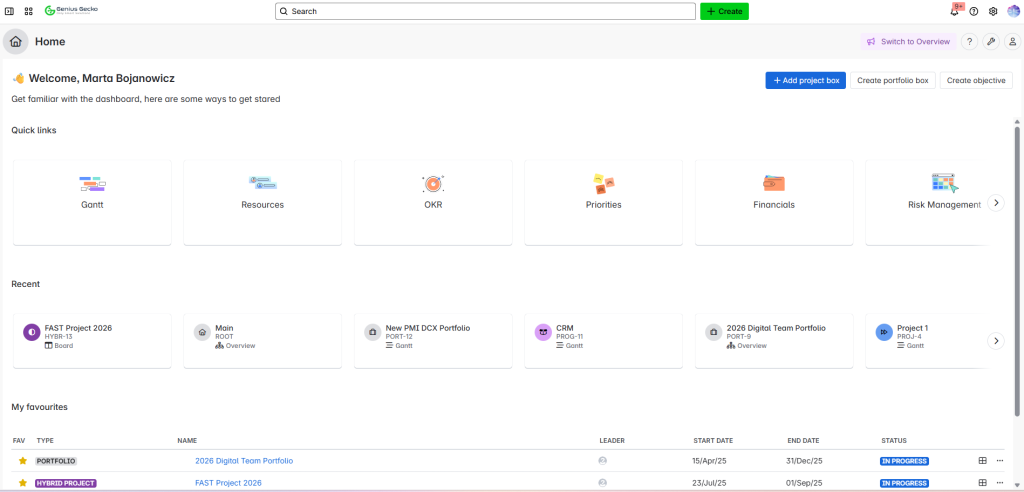
Strategic and business management skills as essential — ensuring that project execution aligns with organizational strategy.
5. Removing obstacles to progress
Sometimes the most impactful thing a PM can do is remove friction:
- Securing missing resources.
- Escalating blockers.
- Challenging “we’ve always done it this way.”
Once upon a time, one PM noticed that cross-department approvals were causing weeks of delay. By facilitating a streamlined decision process, they cut the approval cycle from three weeks to three days.
Barrier removal is a meaningful part of effective leadership and stakeholder engagement — enabling teams to innovate and adapt.
Why This Matters for Organizations
When PMs operate in this way, they don’t just deliver projects — they elevate the organization’s entire way of working:
- Cross-team trust increases.
- Transparency becomes the norm.
- Teams learn to solve problems collaboratively.
- Delivery becomes more predictable and value-driven.
At Genius Gecko, we combine these people-first practices with the power of tools like Jira and BigPicture, ensuring that transformation is sustainable.
Final Thoughts
Tools matter. Processes matter. But our own client history, and decades of research agree:
It’s the project manager’s leadership, communication, and problem-solving that truly drive transformation.
With over 230 client stories behind us, we’ve seen firsthand the difference it makes when PMs lead with empathy, clarity, and strategic focus.
If you’re ready to see your projects deliver more value, we’re ready to help you make it happen.